
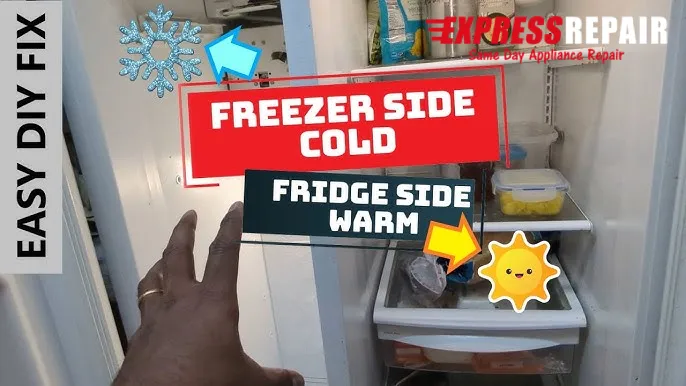
When your freezer is rock-solid cold but the fridge feels like room temperature, it’s more than just annoying — it’s a sign that something in your cooling system is quietly failing behind the scenes. Let’s unpack what’s really going on and what you can (and can’t) fix yourself.
How Your Fridge Actually Cools (and Why the Freezer Matters)
Most modern fridges don’t cool the fridge and freezer separately. Instead:
- The freezer does most of the cooling.
- A fan pushes that cold air from the freezer into the fridge compartment.
- Vents/dampers control how much cold air flows into the fresh food section.
- A thermostat or temperature sensor tells the control board when to run the compressor and the fans.
So if the freezer is cold but the fridge is warm, it usually means:
“The system can still make cold, but the cold air isn’t getting into the fridge properly.”
That’s why this specific combo — cold freezer, warm fridge — points to a pretty narrow set of hidden cooling problems.
Quick Checks Before You Panic
Before you assume the fridge is dying, run through these basic checks:
- Is the fridge actually warm?
Use a thermometer. Aim for:- Fridge: 1–4°C (34–40°F)
- Freezer: −18°C (0°F)
- Thermostats set correctly?
Someone might have bumped the fridge control to “warm” or the freezer to “super cold,” which can starve the fridge of airflow. - Overloaded with food?
Jam-packed shelves, especially in front of vents, can block cold air from spreading.
If all that seems fine and you still have a cold freezer and warm fridge, it’s time to look deeper.
Hidden Cooling Problem #1: Blocked or Frozen Air Vents
Why vents matter
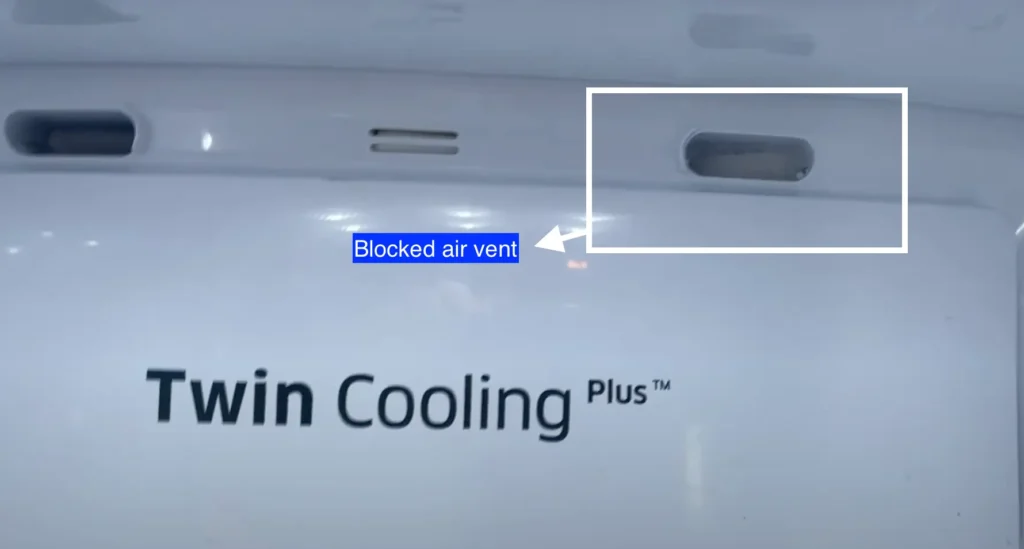
Cold air flows from the freezer to the fridge through air ducts and vents, usually on the back wall. If these are blocked, your freezer can stay cold while your fridge slowly warms up.
What blocks them
- Food containers pushed right up against the back wall
- Frost or ice buildup inside the duct
- Packaging or bags covering an air outlet
What you can do
- Move items away from vents and back walls.
- Avoid stacking tall items directly in front of outlets.
- If you see heavy frost or ice around the vents:
- Turn off the fridge.
- Let it fully defrost (yes, completely — doors open, towels down).
- Clean up any water and restart after everything is dry.
If the problem goes away and returns in a week or two, you likely have a defrost system issue, not just blocked vents.
Hidden Cooling Problem #2: Evaporator Fan Issues (The Silent Trouble-Maker)

Inside the freezer there’s a small fan (the evaporator fan). Its job: pull air over the evaporator coils and push that cold air into both the freezer and the fridge.
When things go wrong:
- Sometimes the freezer still stays cold, because it’s right next to the coils.
- The fridge, farther from the cold source, becomes warm or just “cool-ish.”
Signs your evaporator fan is the problem
- Freezer is cold, fridge is warm.
- You don’t hear a fan running when the doors are closed and the compressor is on.
- The fan makes chirping, grinding, or rattling sounds.
- The fan only runs sometimes, or stops after a few seconds.
What you can check safely
- Open the freezer door and press the door switch (this often tells the fan to run).
- Listen closely:
- No sound at all → fan may be dead, stuck, or iced up.
- Intermittent scraping → fan blades hitting ice.
If the fan is iced over, a full manual defrost can temporarily fix it. But ice on the fan usually means a bigger defrost problem causing repeated frost buildup.
Hidden Cooling Problem #3: Defrost System Failure
This is one of the most common hidden cooling problems behind a cold freezer and warm fridge.
In frost-free fridges, the defrost system periodically melts ice off the evaporator coils. When it fails:
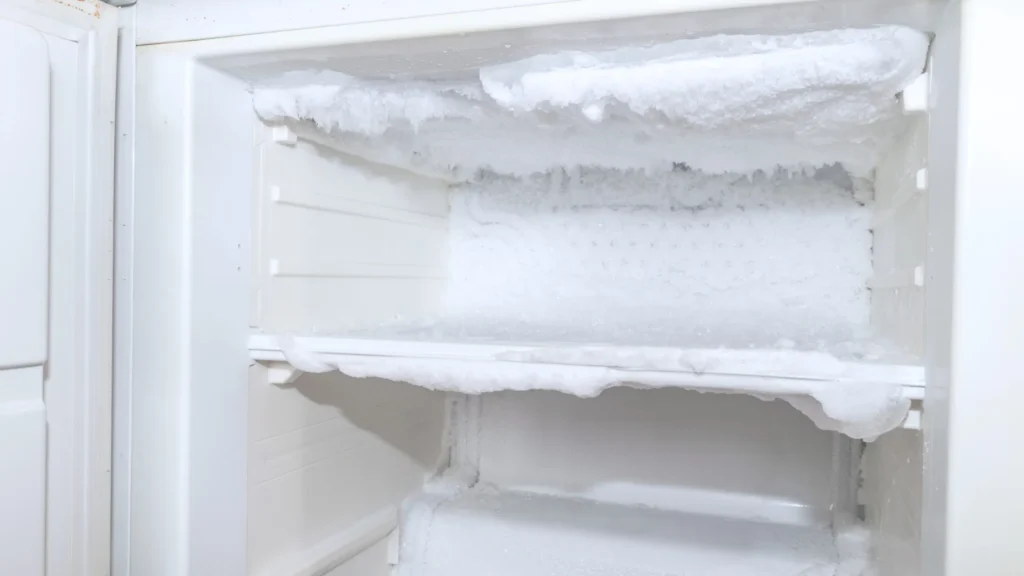
- Thick ice builds up on the coils.
- Air can’t pass through freely.
- Freezer might still be cold near the coils, but airflow to the fridge is choked.
Typical defrost components that can fail
- Defrost heater
- Defrost thermostat/thermistor
- Defrost timer or electronic control board
What it looks like
- Remove the freezer’s back panel (only if you’re comfortable and the unit is unplugged).
- If you see a solid block of white ice around the coils, that’s a classic defrost failure symptom.
What you can do yourself
- Perform a full manual defrost (turn the unit off, doors open, towels ready).
- Clean up melted water and restart.
If it cools perfectly for a few days and then the “freezer cold but fridge warm” problem returns, the defrost system likely needs a professional repair. Manual defrosting will become a constant band-aid.
Hidden Cooling Problem #4: Dirty Condenser Coils

Your fridge dumps heat into the room using condenser coils. If they’re covered in dust and pet hair, the whole system runs hot and inefficient.
Result:
- Freezer might still stay fairly cold.
- Fridge warms up or struggles to maintain safe temperatures.
How to check
- Look under or behind the fridge for coils.
- If they’re fuzzy, grey, or caked in dust — they’re overdue for cleaning.
How to clean safely
- Unplug the fridge.
- Use:
- A coil cleaning brush or soft paintbrush.
- Vacuum cleaner with a narrow attachment.
- Avoid bending or crushing the coils.
Clean coils help the compressor and fans work less and cool more effectively.
Hidden Cooling Problem #5: Stuck or Broken Air Damper
Many fridges use a damper — basically a small door — that opens and closes to control how much cold air flows from the freezer into the fridge.
If the damper:
- Sticks closed → freezer cold, fridge warm
- Breaks mechanically
- Gets jammed with ice, foam, or debris
What you might notice
- The area where cold air usually enters the fridge feels room temperature, even when the freezer is fine.
- You may not hear much airflow inside the fridge, but the freezer fan sounds normal.
Damper issues are often hidden behind internal panels and may be trickier to DIY. A technician can confirm if the damper assembly needs replacement.
Hidden Cooling Problem #6: Temperature Sensors & Control Board
Modern fridges rely on thermistors (temperature sensors) and an electronic control board to manage cooling.
If a sensor fails or reads incorrectly, the control board might think:
- The fridge is colder than it actually is → and stop sending enough cold air.
- Or the freezer needs extra cooling, which can over-cool the freezer while the fridge gets neglected.
Symptoms that point to control/sensor issues
- The fridge display shows normal temperatures, but a separate thermometer says otherwise.
- Freezer is “too cold” while the fridge is too warm.
- The compressor and fans cycle in strange, short, or very long patterns.
Diagnosing this usually requires tools and experience, so it’s best left to an appliance pro.
Behavior-Based Problems: When It’s Not the Fridge’s Fault
Not all “freezer cold but fridge warm” issues are hardware failures. Sometimes it’s how the fridge is used or where it lives.
Things that can quietly sabotage cooling
- Door frequently open
Long browsing sessions with the door open let warm, humid air flood in. The fridge warms up first while the freezer stays relatively stable. - Door seals (gaskets) leaking
If seals are cracked, dirty, or not closing tightly:- Cold air leaks out.
- Moist air leaks in, creating frost and overworking the system.
- Close a door on a sheet of paper.
- Gently pull — you should feel resistance all the way around the door.
- Fridge pushed too close to the wall
If there’s not enough space for airflow around the back or sides, heat can’t escape. This can cause poor overall cooling and especially a warm fridge section. - Very hot room or no ventilation
In tiny, closed rooms or next to ovens, the fridge works harder and might not keep up, especially the fridge compartment.
When to DIY and When to Call a Technician
You can safely handle some of these hidden cooling problems yourself. Others really need professional tools and know-how.
Reasonable DIY tasks
- Adjust thermostat settings.
- Rearrange food to avoid blocking vents.
- Full manual defrost of the unit.
- Clean condenser coils.
- Check and clean door gaskets.
- Make sure the fridge has space around it for ventilation.
Call a pro if you suspect
- Evaporator fan failure.
- Repeated ice buildup after multiple defrosts.
- Defrost heater, thermostat, or timer problems.
- Faulty air damper.
- Control board or temperature sensor issues.
- Strange burning smells, loud buzzing, or tripping breakers.
If food safety is a concern — for example, the fridge has been above 5°C (41°F) for several hours — err on the side of throwing perishable food away rather than risking foodborne illness.