

If your washing machine smells bad, you are not alone. Musty, sour, or moldy odors usually mean bacteria and detergent buildup are hiding in places you do not see. The good news: you can remove the smell and keep it from coming back with a simple, systematic cleaning routine.
Why Your Washing Machine Smells
Most bad washing machine smells come from a few common issues:
- Detergent and softener buildup – Using too much detergent or liquid softener leaves a sticky film inside the drum, hose, and detergent drawer.
- Standing water – Water trapped in the door gasket, drain hose, or pump filter becomes a perfect environment for bacteria and mold.
- Poor ventilation – A closed door and a damp drum keep everything wet for hours, which accelerates odor.
- Clogged drain pump filter – Lint, coins, hair ties, and other debris collect in the filter and start to smell over time.
Fixing these causes is the key to eliminating odors for good.
Safety First
Before you start:
- Switch the washer off and unplug it from the outlet.
- Turn off the water supply if you will be working near hoses or the drain pump filter.
- Keep a towel or shallow tray nearby to catch any water that may escape.
Step-by-Step Cleaning Guide

Step 1: Empty and Inspect the Washer
- Remove all laundry from the drum.
- Check the drum for visible objects: coins, hairpins, tissues, or wet lint.
- Wipe the inside of the drum with a clean, damp cloth to remove loose residue.
Step 2: Clean the Door Gasket (Front-Load Washers)
For front-load washers, the rubber door gasket is one of the main odor sources.
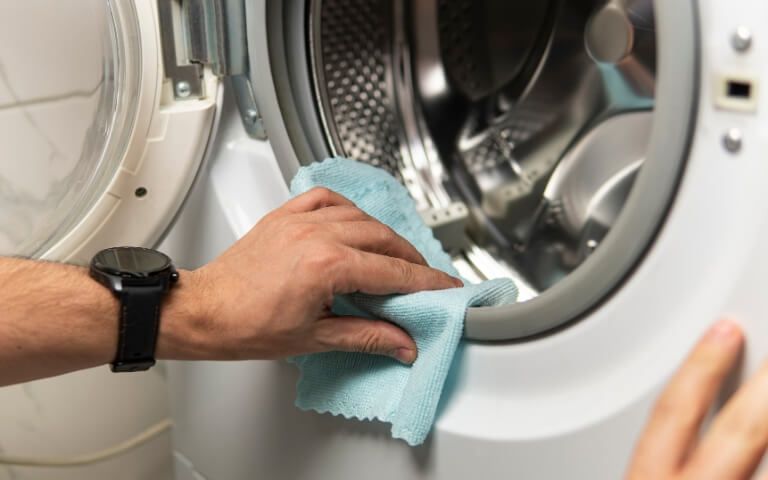
- Gently pull back the rubber seal around the door.
- Remove any trapped items: hair, lint, coins, or small clothing pieces.
- Wipe the area thoroughly with a cloth and a mild cleaning solution.
- Pay extra attention to folds and corners where black spots (mold) may appear.
- Dry the gasket with a clean towel.
Tip: If you see heavy mold or damage to the gasket, professional service may be needed.
Step 3: Deep-Clean the Drum with a Hot Wash
- Make sure the drum is empty.
- Select the hottest and longest wash cycle available.
- Add a washing machine cleaner or follow the manufacturer’s recommendation.
- Start the cycle and let it run completely to flush out residue and bacteria.
Avoid mixing different cleaning chemicals (for example, bleach and vinegar) in one cycle. Follow the instructions on the product label.
Step 4: Clean the Detergent Drawer
- Pull out the detergent drawer as far as it will go. Many drawers have a release tab so you can remove them fully.
- Soak the drawer in warm water and scrub away detergent and softener buildup.
- Use a small brush or cloth to clean inside the drawer compartment.
- Rinse and dry the drawer, then slide it back into place.
Step 5: Clean the Drain Pump Filter
Many washers have a small access door near the bottom front panel.
- Place a towel and shallow tray under the filter cover.
- Open the cover and slowly unscrew the filter cap.
- Let the water drain out into the tray.
- Remove lint, coins, and debris from the filter.
- Rinse the filter under running water and reinstall it securely.
- Close the access door and wipe the area dry.
A clean filter helps the washer drain properly and reduces stagnant water that causes odors.
Step 6: Improve Airflow and Drying
When the cleaning cycle is finished:
- Leave the door and detergent drawer open for several hours so the interior can dry.
- Wipe away any remaining moisture in the drum and around the door gasket.
- Make this a habit after every laundry day to prevent moisture buildup.
How to Keep Your Washer Smelling Fresh
To prevent the smell from returning:
- Use the right amount of detergent. High-efficiency washers need HE detergent and much less of it than you think.
- Avoid constant cold washes. Run a hot maintenance wash (empty drum) once a month.
- Do not overload the washer. Overloading traps dirt and prevents proper rinsing.
- Remove laundry promptly. Do not leave wet clothes in the drum for hours or overnight.
- Keep the door slightly open. This simple habit reduces moisture and mold growth.
These small steps dramatically reduce the chance of bad odors coming back.
When You Need Professional Help
If your washing machine still smells bad after a thorough cleaning, or if you notice issues like standing water, error codes, or unusual noises, the problem may be deeper in the drain system, pump, or internal hoses.
That is the right time to call an expert. A trained technician can inspect the machine, check internal parts, and fix hidden issues that DIY cleaning cannot reach. To schedule professional service, book a washer repair visit and get your washer back to working – and smelling – like new.